- Home
- All programs
- Spanish and Health in Latin America – ICDS
Spanish and Health in Latin America – ICDS
Apply NowProgram overview
Through CFHI’s partnership with ICDS Costa Rica, this four-week immersive program offers students a unique opportunity to explore health, culture, and language in Costa Rica while gaining insight into regional public health systems. Participants strengthen their Spanish skills while engaging directly with Costa Rica’s healthcare landscape. Advanced Spanish speakers may participate in clinical observation experiences, while students with beginner Spanish engage in meaningful community-based health work that connects them with local public health organizations.
The program awards 6 academic credits and includes two complementary courses: Healthcare in Latin America, taught in English, and Spanish for Health Sciences, offered at the appropriate language level to support students’ communication skills in healthcare environments. Over four weeks, students learn from local professionals, develop their Spanish in real-world contexts, and gain a deeper understanding of health challenges and systems across Costa Rica, Latin America, and the Caribbean.
General information
Costa Rica
Global Health Nursing
Hospital & Inpatient Medicine
Intensive Beginner Spanish
Non-communicable Diseases
Public Health
Public Health & Advocacy
4 Weeks - $5495
About this program
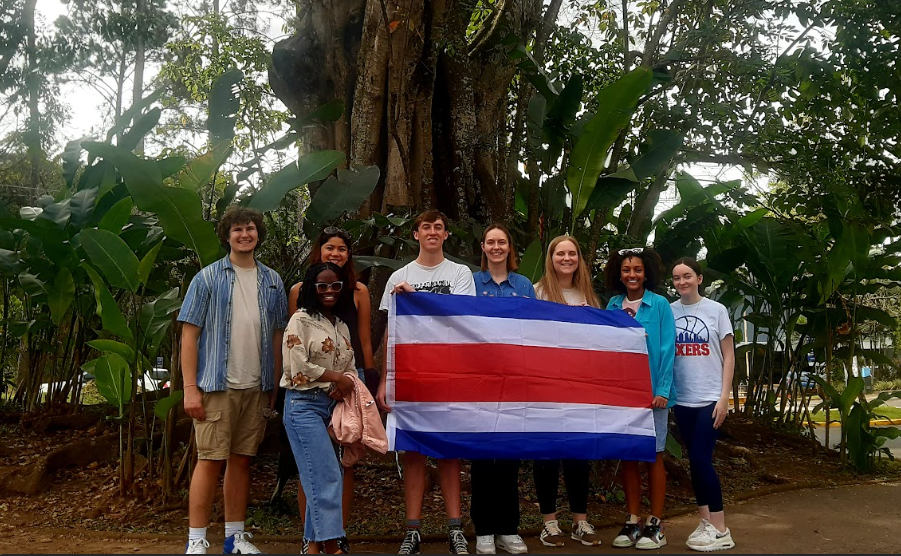
Costa Rica is one of the oldest and most politically stable democracies in the world. It famously abolished its army in 1948, choosing to invest resources in education and healthcare instead. Costa Rica is home to around 5% of the world’s total biodiversity with 25% of the territory being protected national parks or wildlife reserves. The country’s slogan: Pura Vida, doesn’t only refer to the amazing wildlife but also to the friendly and laid-back culture. Costa Ricans aka “Ticos” are known for their courtesy and hospitality.
San Jose, the capital of Costa Rica, is a city of contrasts, with sprawling modern developments and centuries-old historic architecture, traditional values and progressive ideas. ICDS students, live and study in one of the most vibrant and active districts of the city on the east side: San Pedro. San Pedro is the site of some of the largest universities in the country and has a unique, youthful energy. It’s home to parks, restaurants, shops, and nightlife all within walking distance or a short bus or car ride away.

With many years of hosting international students, our Homestay Coordinator and our network of host families provide a safe and natural environment to enjoy the host culture of Costa Rica. Each accommodation is carefully selected to ensure proximity to the university campus and ICDS office, quality care for students, and flexibility in hosting international students. Homestays are one of the most important parts of this experience in experiential learning. They facilitate immersion and adaptation to the new culture and language, and they help you to integrate faster into local society. Daily immersion with host families provides program participants with a relaxed environment to practice Spanish, ask questions about their surroundings, and get support from another network in addition to their classmates, faculty, and ICDS staff., Private room, Wi-fi, laundry service, cleaning, one student per household, Breakfast and dinner included

- Airport pick-up and transportation to homestay provided by CFHI team and the on-site orientation session takes palce on the day after the arrival.
- US-citizens do not require a visa to enter Costa Rica and are allowed to stay in the country for up to 180 days
- ICDS offers guidance with visa extension or renewal for students of other nationalities.

What’s Included
CFHI Program fees include the majority of your on the ground costs. As a nonprofit, CFHI strives to keep fees low and offers fundraising opportunities, scholarships and discounts.
Pre-Departure Support
- Program advising and support via email, phone, and web meeting from CFHI’s Central Leadership team
- Detailed online Pre-Departure Training that includes modules on program logistics (flights, visas, immunizations, and more), intercultural learning, introduction to health realities at your program site, and much more
On-Site Services
- On-site Counselor
- 24/7 emergency support
- Field trips
- Cultural activities
- Visa process guidance (when needed)
Post-Return Resources
- Opportunities to engage as a CFHI Alumni Ambassador, reviewing scholarship applications, speaking on CFHI panels, and more
- Access to CFHI alumni-only social media group/s featuring news and career opportunities related to Global Health
- CFHI alumni newsletter highlighting events, professional development opportunities, resources, and ways to stay involved
Uniquely, 60% or more of CFHI student program fees go directly to the communities they will be visiting, benefiting the local economy at large and specifically underserved health systems.
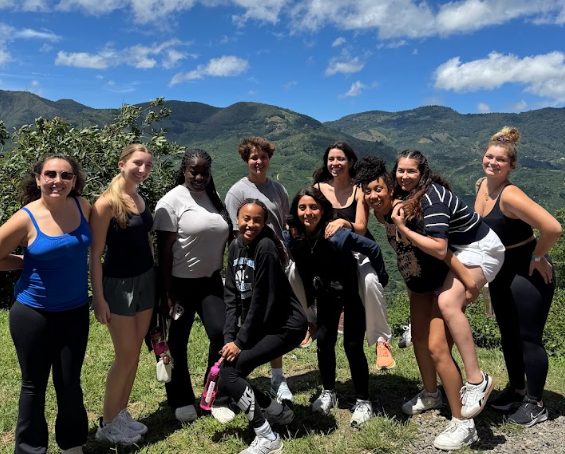
Class work takes place from Monday through Thursday, providing students with three-day weekends to explore the country on their own. The program includes field trips and cultural activities

Students start their days with a delicious breakfast at their homestays to then attend classes at Hospital Clínica Bíblica. In the afternoons, depending on the day of the week, they move to their rotation/community work sites or take Spanish classes at Universidad Latina, which is conveniently located a few blocks away from the ICDS office where they can also hang out in the student area. They can also enjoy coffee at one of the nice cafés around campus. After classes are over, they return to their homestays, which are either a short bus ride or a brief walk from campus. On weekends when there’s no planned field trip or cultural activity, they explore the country’s countless natural wonders, beaches, volcanoes, rainforests or mountains, there’s plenty to choose from.
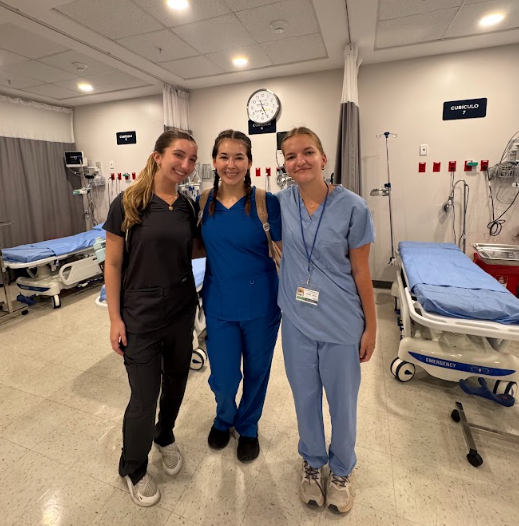
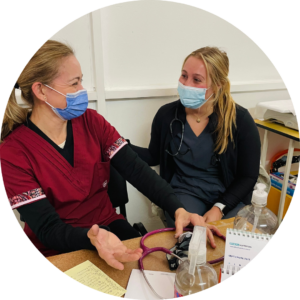
Clinic rotations & Public Health placements
Meet the Local Team
Jorge Nowalski
CFHI San José Program Director
Jorge Nowalski - CFHI San José Program Director
Jorge is the President and Academic Director of the International Center for Development Studies (ICDS) and chairs the Foundation for Sustainability and Equity (ALIARSE). He holds a Ph.D. from The London School of Economics and Political Science (LSE) as well as a Master’s degree in Social Planning in Developing Countries and a Master’s degree in Industrial Relations, both from LSE. Jorge has been a consultant for international organizations such as ILO, UNDP, OAS, Inter-American Development Bank, as well as author and coauthor of books and articles on topics such as trade and poverty, labor issues, social security, trade unions, and human development. Jorge enjoys sports and music.

Ivannia Morales
CFHI San José Local Coordinator
Ivannia Morales - CFHI San José Local Coordinator
Ivannia has a rather varied background. She majored in Communications (Audiovisual production) at Universidad de Costa Rica and in Saxophone at National Music Institute and Universidad Nacional de Costa Rica. Later in life, she discovered her love for showing Costa Rica to tourists so she pursued her certification as a tour guide at Instituto Nacional de Aprendizaje. At ICDS, Ivannia is the point of contact with both our partner universities and our potential students. Aside from her position at ICDS, she is also an active musician playing the saxophone and singing in a few different musical projects. She also enjoys pottery, yoga and training aerials.
Eligibility
The program is open to trainees from a variety of disciplines and welcomes participants with all levels of Spanish. However, participation in observational clinical rotations requires a minimum level of Spanish proficiency. Prior to arrival, students complete an interview to assess their language skills and determine their eligibility for clinical rotations. To confirm your eligibility, please read CFHI’s general eligibility requirements.
How to Apply
Create profile
Submit application
Hear back from CFHI team
Complete pre-departure training and requirements

Let The World Change You